If you’ve been paying attention over the last few years, you’ve probably noticed something: the vagus nerve has become the “celebrity nerve” of the healthcare world. Everyone, from neurologists to mental health therapists to influencers on TikTok, is talking about vagal tone, regulation, breathwork, and inflammation.
But here’s the truth chiropractors need to know:
We’ve been working with the vagus nerve chiropractic connection for over 100 years.
We just didn’t have the language for it.
Today, neuroscience finally gives us a way to articulate what chiropractors have seen in practice for decades: when the nervous system feels safer, the entire body works better. And the vagus nerve sits at the center of that transformation.
This is your modern guide, not just to understanding the vagus nerve, but to understanding why chiropractors are uniquely positioned to influence how it functions.
Why the Vagus Nerve Matters in Chiropractic
The vagus nerve is the primary communication pathway between the brain and body. It’s responsible for shifting physiology out of defence and into restoration. It influences:
• digestion
• heart rate variability
• inflammation
• immune responses
• emotional regulation
• social engagement
• recovery and repair
In short: it’s the nerve of “I’m safe.”
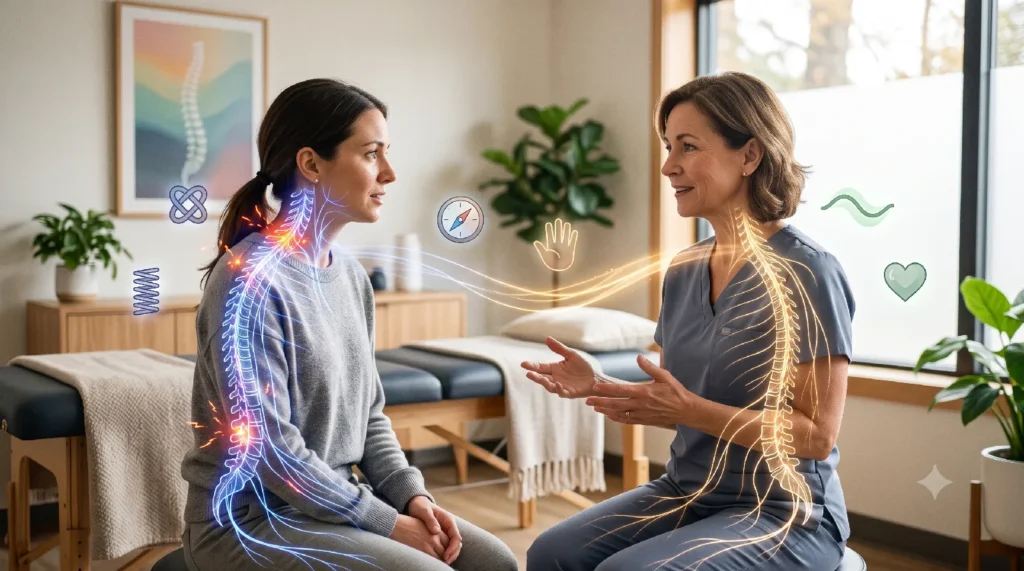
When chiropractors talk about improving tone, adaptability, or communication, we’re really talking about the vagus nerve chiropractic connection, the way adjustments help shift the nervous system toward more efficient regulation.
This isn’t theoretical.
It’s observable.
You see it every day in practice.
The patient whose breathing changes on the table.
The person who says, “I feel clearer.”
The chronic pain case who finally sleeps.
The stressed-out parent who feels a weight lift off their chest.
These aren’t random side effects.
These are signs of a nervous system moving toward safety.
Neuroception: The Missing Piece Most Chiropractors Never Learn
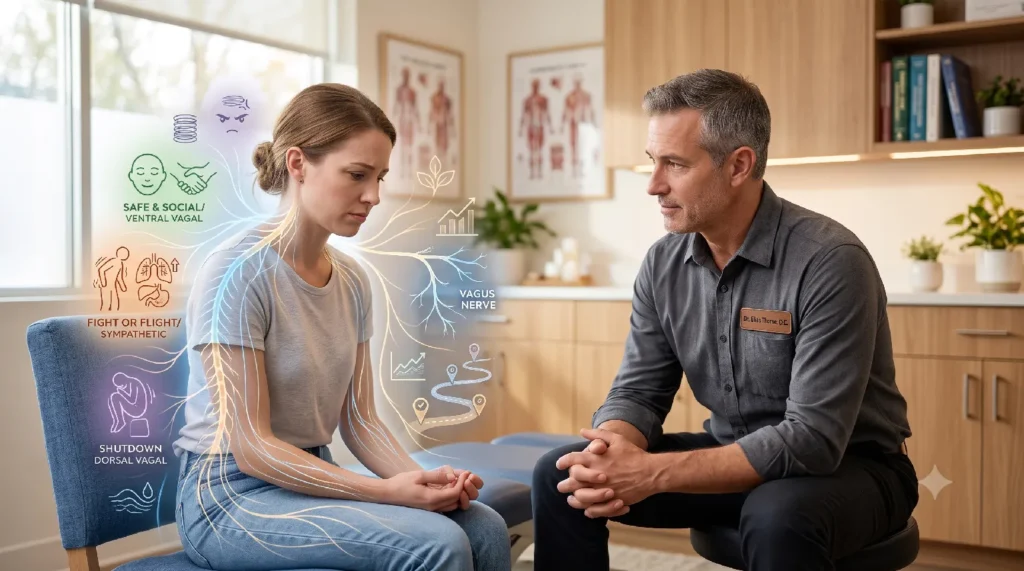
If you want to truly understand the vagus nerve chiropractic connection, you must understand neuroception. Neuroception is the body’s subconscious ability to detect safety or threat, before the brain even thinks about it.
Your patients don’t respond to your technique first.
They respond to your state, your tone, your rhythm, and your predictability.
This is why two chiropractors can do the exact same adjustment…
and get completely different results.
Technique may be the delivery,
but neuroception determines whether the body can receive it.
A body in defence mode will resist.
A body in safety will reorganize.
This is the heart of Polyvagal Theory.
And it’s the modern lens that helps explain why chiropractic works so well.
Adjustments Are Safety Signals When Done Well
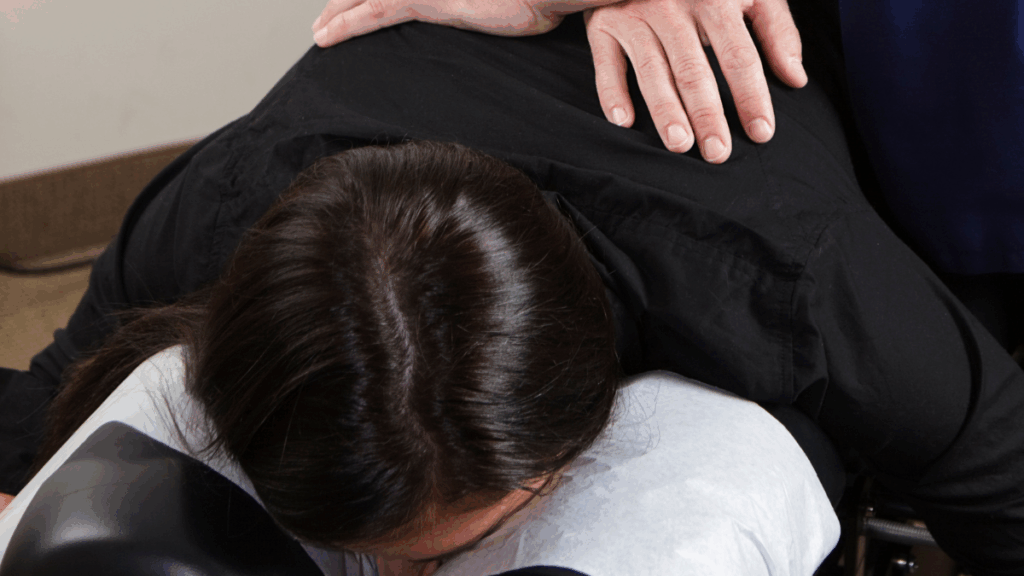
Every chiropractic adjustment is a conversation with the nervous system.
Not because you’re “stimulating” the vagus nerve mechanically,
but because you’re influencing the body’s perception of safety.
A predictable, confident, regulated chiropractor delivers a cue of safety.
A rushed, tense, distracted chiropractor delivers a cue of threat.
Patients feel it long before they think it.
This means the most powerful part of an adjustment isn’t the thrust…
it’s the environment you create around the thrust.
When the tone of your presence is calm, deliberate, and grounded, you activate the implicit vagus nerve chiropractic connection, inviting the system out of defence and into a state where healing becomes possible.
This is why the soft skills of adjusting matter as much as the hard skills.
The Vagus Nerve and Inflammation: A Game-Changer for Chiropractors
One of the most profound discoveries in modern neuroscience is the inflammatory reflex, the vagus nerve’s ability to regulate immune and inflammatory responses.
This is where medicine is confused.
Because when they stimulate the vagus nerve for migraines, they also see improvements in:
• digestion
• anxiety
• energy
• sleep
• immune function
They don’t understand why one intervention influences multiple systems.
Chiropractors do.
Because we understand that the nervous system works as a network, not a line.
When you change the state of the system,
the entire system adapts.
When vagal tone improves,
predictability increases.
When predictability increases,
threat decreases.
When threat decreases,
inflammation drops.
This is the vagus nerve chiropractic connection in real time.
The Vagus Nerve, Social Engagement, and Real-Life Clinical Wins
The vagus nerve doesn’t just influence physiology.
It influences connection.
It regulates eye contact, facial expression, voice tone, and the ability to engage socially. This is why patients often say:
• “I feel lighter.”
• “I feel like myself again.”
• “My anxiety feels different.”
• “I can breathe.”
These are signs of improved social engagement, a direct reflection of vagal tone.
And when you adjust with safety, intention, rhythm, and presence, the body interprets the experience as a signal that the world is safe again.
This is why chiropractic can feel profoundly “whole person” without being complicated.
You’re not fixing symptoms.
You’re unblocking safety.
What This Means for the Future of Chiropractic
Chiropractic is entering a new era, one where neuroscience finally supports what our founders observed but couldn’t technologically explain.
We are no longer talking about bones and biomechanics in isolation.
We’re talking about physiology, neuroplasticity, vagal tone, and regulation.
Chiropractors are becoming the trusted guides in a dysregulated world.
And the more the profession understands the vagus nerve chiropractic connection, the more confident, relevant, and impactful it becomes.
Final Thought
The vagus nerve isn’t a trend.
It’s the operating system for human physiology.
When chiropractors learn how to work with the nervous system instead of at the spine, everything changes, outcomes, communication, confidence, and the entire patient experience.
This is the future of our profession.
And chiropractors who understand it will lead the next generation forward.

- Pelvic Floor Chiropractic: Pelvis, Fascia & Nervous System - August 30, 2026
- Women’s Health and Pelvic Floor Care in Chiropractic Practice - August 4, 2026
- How to Teach Neuroception Simply in Practice - July 16, 2026