
The Soft Skills Chiropractors Aren’t Taught
Every chiropractor learns how to deliver an adjustment. Very few learn how to help a nervous system receive one.
That is the real differentiator in our profession.
Most chiropractors think better results come from changing technique, force, or speed. But what they are craving is connection, presence, and nervous system awareness. They want the missing piece. They want the part of adjusting that cannot be memorized or standardized. They want the part that makes people feel safe.
This is where the soft skills of chiropractic adjusting come in. These are not fluffy concepts. These are neurological principles that determine whether an adjustment is experienced as a threat or as a signal of safety. And safety is what allows the body to reorganize.
When you understand the soft skills, your adjustments change.
Your confidence changes.
Your results change.
And your patients change.
Your State Determines Their State
If there is one message every chiropractor needs to hear, it is this.
Your tone sets the tone.
Your presence shapes their physiology.
Your rhythm becomes their rhythm.
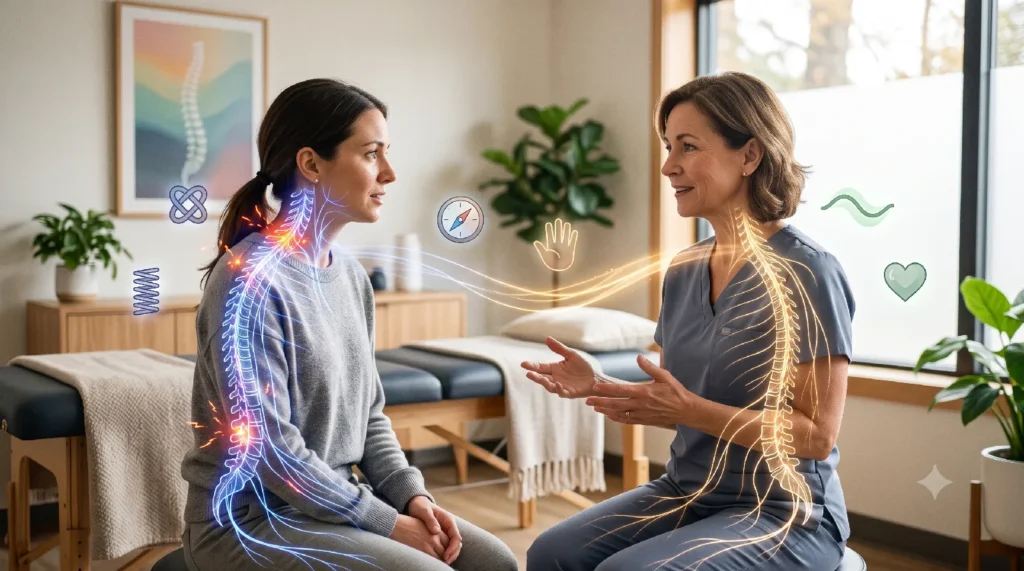
Patients do not respond to your technique first. They respond to your state. Before you ever make contact, their nervous system has already decided whether to tense up or soften, whether to keep the brakes on or let them go.
This is neuroception in action.
It is the body’s constant scanning for cues of safety.
And it happens long before logic, thought, or rational explanation.
This is why the soft skills of chiropractic adjusting are not optional. They change the entire experience of the adjustment. Your technique may guide the segment. Your presence guides the system.
Predictability: The Most Underrated Skill in Chiropractic
The nervous system has one question it asks all day.
Am I safe or am I not?
Predictability is the most powerful cue of safety. When your pacing, your voice, your hand contact, and your sequencing are consistent, the body relaxes and receives. When you are rushed, abrupt, or disconnected, the body goes into defense.
Predictability slows down reactivity.
Predictability increases trust.
Predictability brings breath back into the system.
Chiropractors often chase the harder skills, the perfect line of drive or the ideal vector. But none of it lands if the patient feels tense, confused, or surprised. Predictability is the foundation that lets technique do its job.
Presence: The Skill That Cannot Be Taught in School
Presence is not about being still or quiet. It is about being here. Fully here.
Patients know when your attention is divided. They feel when you are rushed. They sense when you are going through motions instead of guiding a transformation.
Presence is regulation in real time.
Presence is safety.
Presence is leadership through physiology.
This is why the chiropractors who master the soft skills of chiropractic adjusting often get better results with less effort. Their intention is clean. Their energy is grounded. Their patients feel safe enough to let go.
This is not mystical. It is neurological. Safety improves tone.
And tone determines everything.
Touch: The First Language of the Nervous System
Chiropractic is one of the few healing professions left where touch is central. And touch is not neutral. Touch communicates safety or threat.
Touch tells the nervous system whether to soften or brace.
When you touch with clarity, confidence, warmth, and steadiness, the body recognizes the contact as supportive. When touch is abrupt, mechanical, or inconsistent, the nervous system moves into protection.
This is why the soft skills matter.
Touch is more than a setup.
Touch is communication.
The nervous system listens through the skin. It decides whether to allow change based on the signal you send through your hands. The soft skills of chiropractic adjusting elevate your touch so it becomes a cue of safety instead of pressure.
The Corridor Before the Correction
Most chiropractors focus only on the correction. But the body needs a corridor first.
A corridor of safety.
A corridor of breath.
A corridor of predictability.
This is where your entire MacDonald Safety Corridor Protocol comes from. Chiropractors try to adjust a spine that is still in defense. They skip the corridor and go straight for correction. And then they wonder why they have inconsistent results, guarded patients, or people who improve slowly.
When you create the corridor before the correction, the body allows the adjustment instead of bracing against it. The corridor changes everything.
This is the art in the science.
This is the nervous system lens within chiropractic.
This is the heart of the soft skills.
Reading the System: The Silent Language of Practice
There is a moment when a chiropractor stops adjusting bones and starts adjusting people. You notice breath changes. You see subtle shifts in eyes and facial tone. You sense when someone’s system is not ready. You feel when the person has softened enough to respond.
These are the refinements most chiropractors never learn.
These are the skills that turn good chiropractors into masters.
These are the soft skills of chiropractic adjusting that make a patient say, “I don’t know what it is, but this feels different.”
You cannot learn this from a textbook.
You learn it from slowing down, becoming aware, and training yourself to read a nervous system rather than just a spine.
Why These Skills Matter More Than Ever
The world is dysregulated.
People live in chronic defense.
They are stressed, overwhelmed, tense, and disconnected.
They are holding their breath without realizing it.
Most of your patients walk in already braced for something.
They do not need a harder adjustment.
They need a safer one.
This is where chiropractic becomes more than mechanical care. When you master the soft skills, you help people experience their bodies in a way they have not felt in years. You create space. You restore breath. You reintroduce calm. You help them reconnect to themselves.
The soft skills create the environment where healing finally has permission to begin.
This is the future of chiropractic.
And the chiropractors who understand this will lead the way forward.
Continue Learning
- What Is Polyvagal Chiropractic?
- Understanding Neuroception in Chiropractic Care
- Dr. Heidi Haavik’s Research Explained
- The Vagus Nerve and Chiropractic
- The MacDonald Safety Corridor Protocol

- Trend Lines: The Chiropractic Communication Skill That Keeps Practice Members in Care - October 12, 2026
- Pelvic Floor Chiropractic: Pelvis, Fascia & Nervous System - August 30, 2026
- Women’s Health and Pelvic Floor Care in Chiropractic Practice - August 4, 2026