Key takeaway: The pelvic floor is wired into the nervous system’s safety system. When the body senses danger, the pelvic floor guards, and a muscle that cannot relax cannot strengthen well. Create safety first, through the adjustment and hands-on release, and the pelvic floor can finally move, contract, and let go through its full range.
The conversation runs both ways
Most chiropractors meet the pelvic floor as a strength problem. In practice, it is usually a safety problem first.
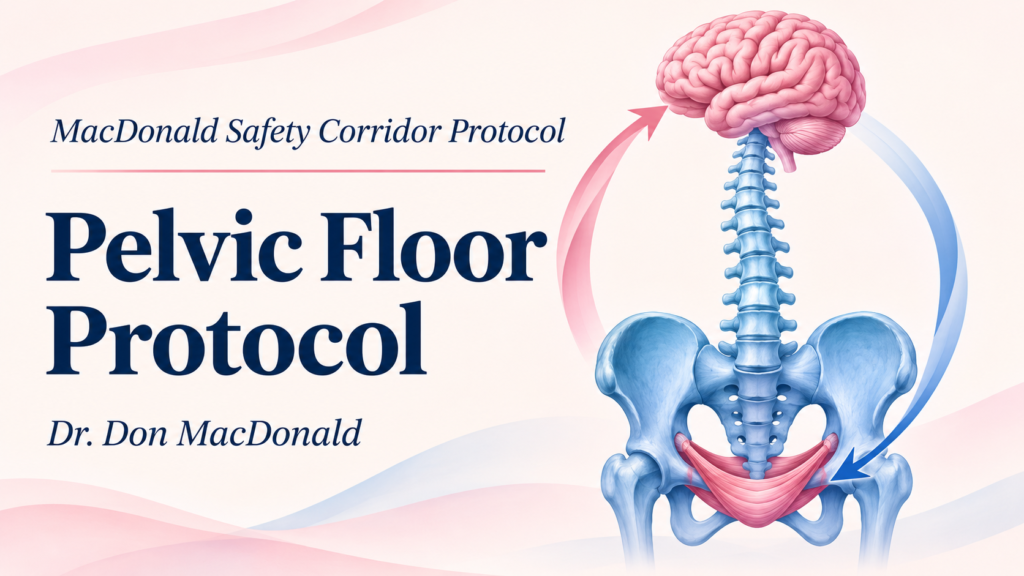
It works in two directions. When the body determines there is danger, or takes on a stressor (physical, chemical, or emotional), it moves into a protective response. A body that stays in protection cannot relax. And a pelvic floor that cannot relax keeps sending danger cues back into the system, which keeps the whole body in a more dysregulated state.
Here is what I hear from practice members again and again: they do not have a hard time flexing the pelvic floor. They have a hard time relaxing it. If we cannot create ease in the pelvic floor, the rest of the system has a hard time detecting safety cues at all.
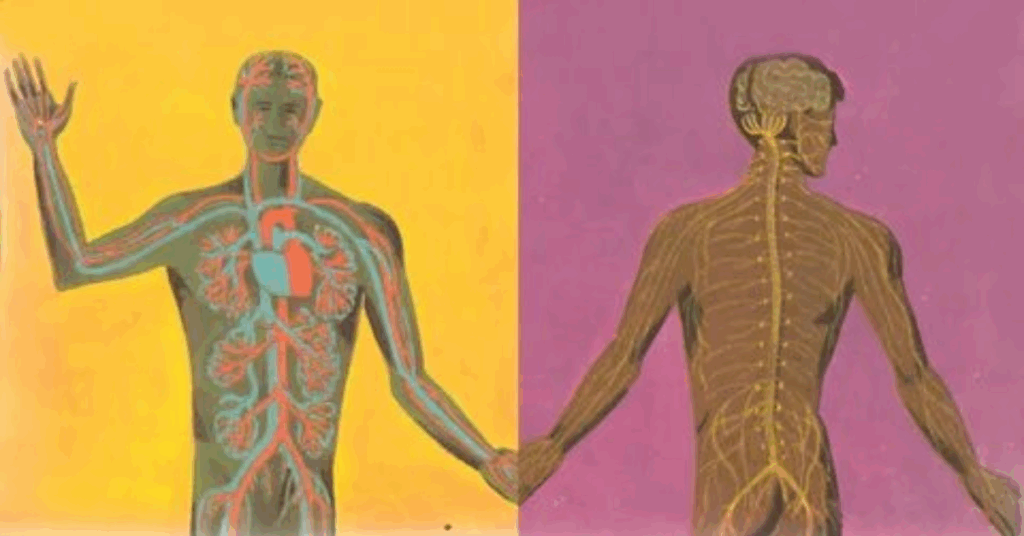
That makes anatomical sense. Fascia is one of the most richly innervated tissues in the body, packed with proprioceptors and nerve endings that feed straight into the autonomic nervous system. The pelvic floor is not just a group of muscles holding things up. It is part of how the body decides whether the world is safe.
Guarding is not weakness
A guarding pelvic floor is a protective pelvic floor. It is not weak. It is braced.
On the external pelvis, guarding shows up as restricted movement through the inferior portion of the pelvis: how the ischial tuberosities move, the tone of the obturator internus, whether the sacrococcygeal ligaments let the tailbone move the way it should, and the tone through the lower abdomen and the anterior quads and hip flexors. A ligament does not flex or contract. It needs to move, extending easily and without restriction, the way a tail lifts and drops. I want to be straight about my lens here: I assess and work externally, so what I am describing is what a protective mechanism feels like from the outside, through a chiropractic examination.
The distinction matters because of what strengthening actually requires. The baseline for strengthening any muscle is full range of motion: a full contraction, and then a full return to ease. Most people with pelvic floor challenges cannot take those muscles through a full range. The muscles become static. Over time the fascia around them densifies, and if it has been going on for years, it can become fibrotic. Asking that system to strengthen first is asking it to do the one thing it is not set up to do.
Why strengthening first backfires
Picture a bicep that is already mostly flexed. Now flex it as hard as you can. It cramps. A muscle that is constantly firing, without the chance to elongate and then contract through its full range, starts to lose function.
The pelvic floor is no different. Continually contracting an already contracted pelvis creates more challenges, not fewer.
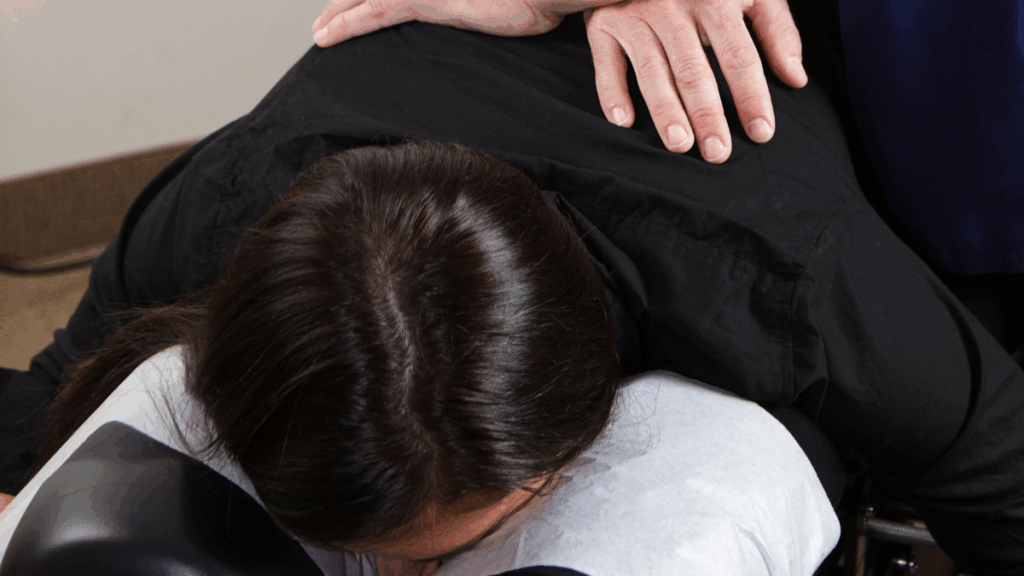
This is where the chiropractic adjustment earns its place. When you put safety cues into the pelvis and adjust, you get a window where the defenses drop. In that window you can open up the fascia and release the tension in the muscles and fascia around the pelvis, immediately after the adjustment. Think of it as the back half of what we call the Safety Sandwich: build rapport, remove a danger cue, then add a safety cue. The adjustment opens the window. The release walks through it. (The full framework lives in the MacDonald Safety Corridor Protocol.)
Regulate first. Then rehabilitate. The strengthening work a practice member does afterward finally has a full range of motion to work with.
The external assessment, the chiropractic way
None of this requires internal work. This is not internal physiotherapy. Everything here is external, over clothing, and built on consent.
The examination starts the way chiropractic always starts: range of motion, and checking for subluxation, in the lumbar spine, the SI joints, and the sacrum. Then we add the pieces a standard exam often skips:
- Posterior: mobility, motion, and subluxation check of the femoral heads, the lateral stabilizers of the pelvis, plus the tone of the obturator internus, the sacrotuberous ligament, and the lower glute musculature.
- Central: if, after a full explanation and clear consent, we move to the middle saddle work, we feel the tone of the perineum over clothing. A healthy perineum is flexible and bendy, like an elastic band. That elasticity is how it monitors and regulates pressure and disperses load throughout the pelvis. A restricted, tight perineum cannot do that job. And this component is always the practitioner’s call. If you are not comfortable doing it, do not do it; the work stands without it. If you are comfortable, the benefit is significant. That comfort call runs both ways: some female chiropractors are not comfortable doing it, and as a male chiropractor there are certain people I am not comfortable doing it on either. It is simply an option in your tool belt, there when it fits and set aside when it does not.
- Anterior: the hip flexors, the superior quads, and the lower abdomen.
Posterior, central, anterior. Three components, one question underneath all of them: is this pelvis protecting, and can it let go? The full protocol is laid out on our pelvic floor chiropractic page.
Lock 3 and Lock 4: the tag team
In the Safety Corridor, the lower ribs and diaphragm are Lock 3, and the lumbo-pelvic region and pelvic floor are Lock 4. They are neighbors for a reason.
Normal breathing is a tag team. The diaphragm and the pelvic floor move in unison. When the rib cage gets distorted, it distorts the diaphragm. The upper fibers of the hip flexors attach to the posterior ribs, so asymmetrical tone there can travel down the psoas and put torsion into the pelvis.
So we look from both ends. We want the diaphragm freely movable, so it does not restrict anything below it. And we want the pelvic floor fully movable, so it does not put distortions up into the diaphragm. When the tag team works, the body handles the rises and falls of abdominal pressure smoothly, and that smoothness itself sends safety cues to the nervous system.
One honest boundary: this is coordination and regulation work. When a practice member’s goal is continence or prolapse support, that is pelvic floor muscle training, and we refer to the physiotherapists who do that work well. Our piece is the nervous system piece, and it makes their piece work better.
The pattern I keep seeing, and a Monday morning start
Since COVID, more people work from home and sit more than any generation before them. In practice, we are finding more and more restricted fascia through the pelvis. That restriction does not stay in the pelvis. It affects down into the knees, and up into the lower ribs and hip flexors.
Here is why it matters for your adjusting. If the pelvis cannot disperse load, then even a good adjustment, one that removes danger cues, has a limited benefit, because the fascial tissues still cannot disperse energy well. Address the danger cues and the tissue at the same time, and the benefit of the adjustment stops leaking away.
So here is the Monday morning version. After a side posture adjustment, compress the glutes and slide the fascia back and forth. It takes about ten seconds. What it does is simple: it takes everything through a fuller range of motion while the post-adjustment window is open. Then recommend the person get up, walk, and move, so everything stays freed up.
Small move. Big principle: safety first, then strength, then movement.
All of this is explained in full in our upcoming book, The Polyvagal Shift: The Future of Nervous-System-Centered Chiropractic, coming in January/February 2027.
Learn it hands-on
This work is hard to learn from a page, so Brandi and I teach it in the room, with tables and practice built in. Unlocking the Pelvis and the Pelvic Floor is coming to:
- Perth, Australia: Saturday, February 20, 2027
- Edmonton, Alberta: Saturday, March 13, 2027
- Halifax, Nova Scotia: Saturday, March 20, 2027
- Windsor, England: April 16 to 17, 2027 (pelvic floor protocol Friday, Communication Extravaganza Saturday)
Dates and registration for all four are at The Informed Chiropractor.
Frequently asked questions
Can you assess the pelvic floor without internal work?
Yes. The assessment described here is entirely external and over clothing: range of motion and subluxation checks of the lumbar spine, SI joints, sacrum and femoral heads, tone of the obturator internus, sacrotuberous ligament, glutes, hip flexors and lower abdomen, and, with full explanation and consent, the tone of the perineum. It is a chiropractic examination, not internal physiotherapy.
Is a tight pelvic floor the same as a weak pelvic floor?
No. A guarding pelvic floor is braced, not weak. Most people with pelvic floor challenges can contract; what they cannot do is fully relax. Strengthening a muscle that cannot first move through a full contraction and a full return to ease tends to add cramping and dysfunction rather than capacity.
Why does the nervous system matter for the pelvic floor?
Because the relationship runs both ways. A body in a protective state keeps the pelvic floor braced, and a braced pelvic floor keeps sending danger cues into the system. Fascia is densely innervated and reports directly into the autonomic nervous system, so creating ease in the pelvic floor is one way of helping the whole system detect safety.
What is the Safety Sandwich?
A simple sequence from the MacDonald Safety Corridor Protocol: build rapport, remove a danger cue, then add a safety cue. Around an adjustment, it means the adjustment opens a window where defenses drop, and hands-on release in that window helps the pelvis let go.
What can I do differently on Monday morning?
After a side posture adjustment, compress the glutes and slide the fascia back and forth for about ten seconds, taking the tissues through a fuller range of motion while the post-adjustment window is open. Then get your practice member up and walking.

- Polyvagal Pelvic Floor: Why Safety Comes Before Strength - November 15, 2026
- Why Patients Leave Care and the Conversation That Keeps Them: Communication in Chiropractic with Dr. Don and Brandi MacDonald - October 26, 2026
- Why the Pelvic Floor May Be the Missing Link in Polyvagal Chiropractic - October 25, 2026