
Polyvagal Theory for Chiropractors: Understanding the Nervous System Behind Better Patient Outcomes
Dr. Don MacDonald Chiropractor teaches a nervous system-centered approach to chiropractic care rooted in safety, connection, regulation, and human potential.
Trusted by chiropractors worldwide
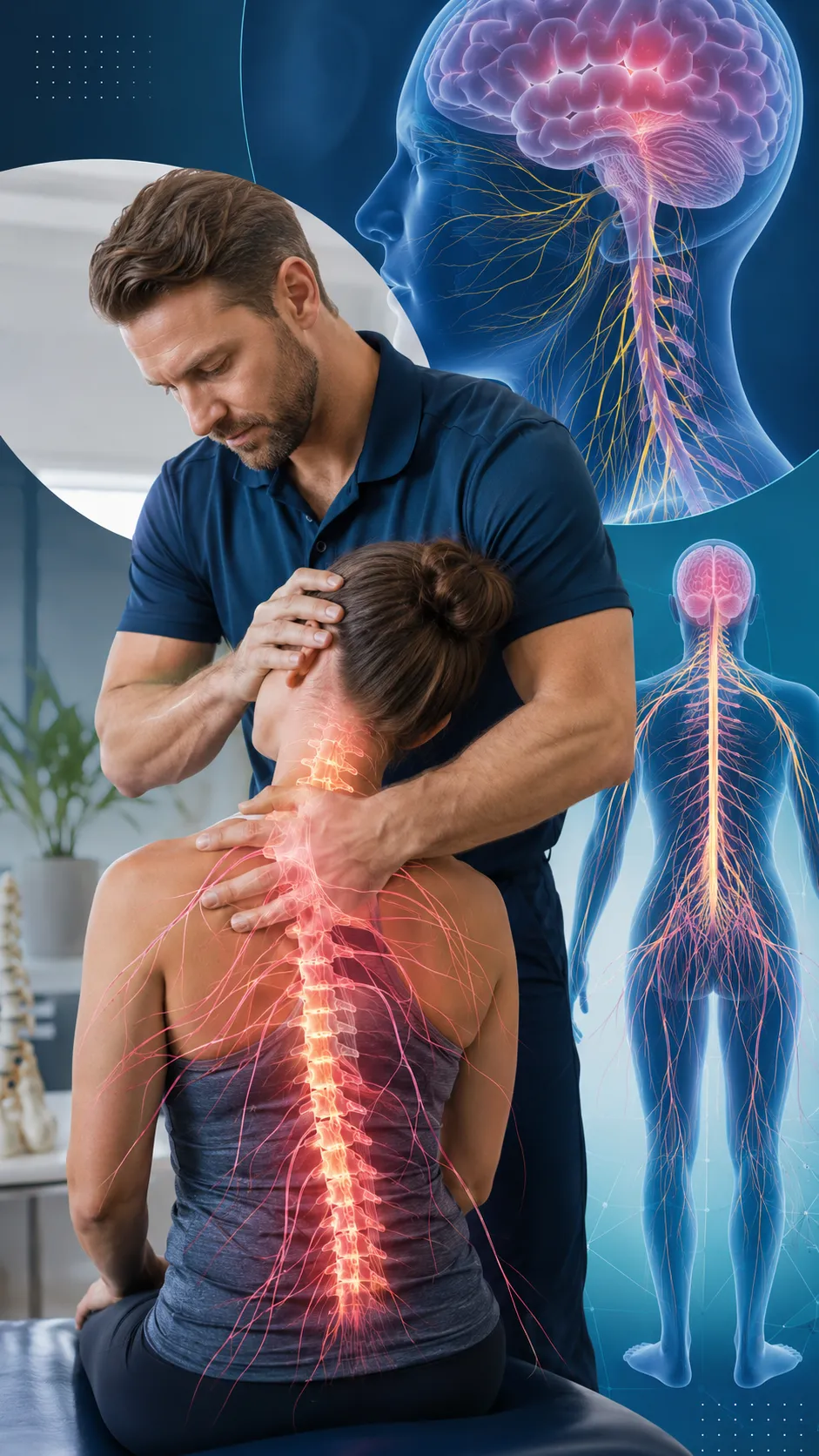
Why Are Some Patients Easier To Help Than Others?
Every chiropractor has experienced it.
Two patients receive similar care. One responds quickly and seems to hold their adjustments with ease. The other struggles to make progress despite receiving excellent chiropractic care.
For years, chiropractors have searched for answers through biomechanics, posture analysis, technique systems, and structural correction. While these factors are important, they do not explain every patient outcome.
Patients are not simply collections of bones, joints, and muscles. They are living nervous systems constantly responding to their environment.
Polyvagal Theory offers chiropractors a powerful framework for understanding why patients respond differently, how stress influences healing, and why safety may be one of the most important factors in clinical outcomes.
Understanding Polyvagal Theory can help chiropractors improve communication, strengthen patient trust, enhance retention, and create experiences that support regulation and healing.
Key Takeaways
✓ Polyvagal Theory explains why patients respond differently to care.
✓ The nervous system constantly evaluates safety and danger.
✓ Neuroception influences healing and communication.
✓ The vagus nerve plays a key role in regulation.
✓ Understanding these concepts helps chiropractors improve patient outcomes.
What Is Polyvagal Theory?
Polyvagal Theory was developed by neuroscientist Dr. Stephen Porges and provides a modern understanding of how the autonomic nervous system functions. Most healthcare professionals were taught that the autonomic nervous system consists of two branches:
- Sympathetic (fight-or-flight)
- Parasympathetic (rest-and-digest)
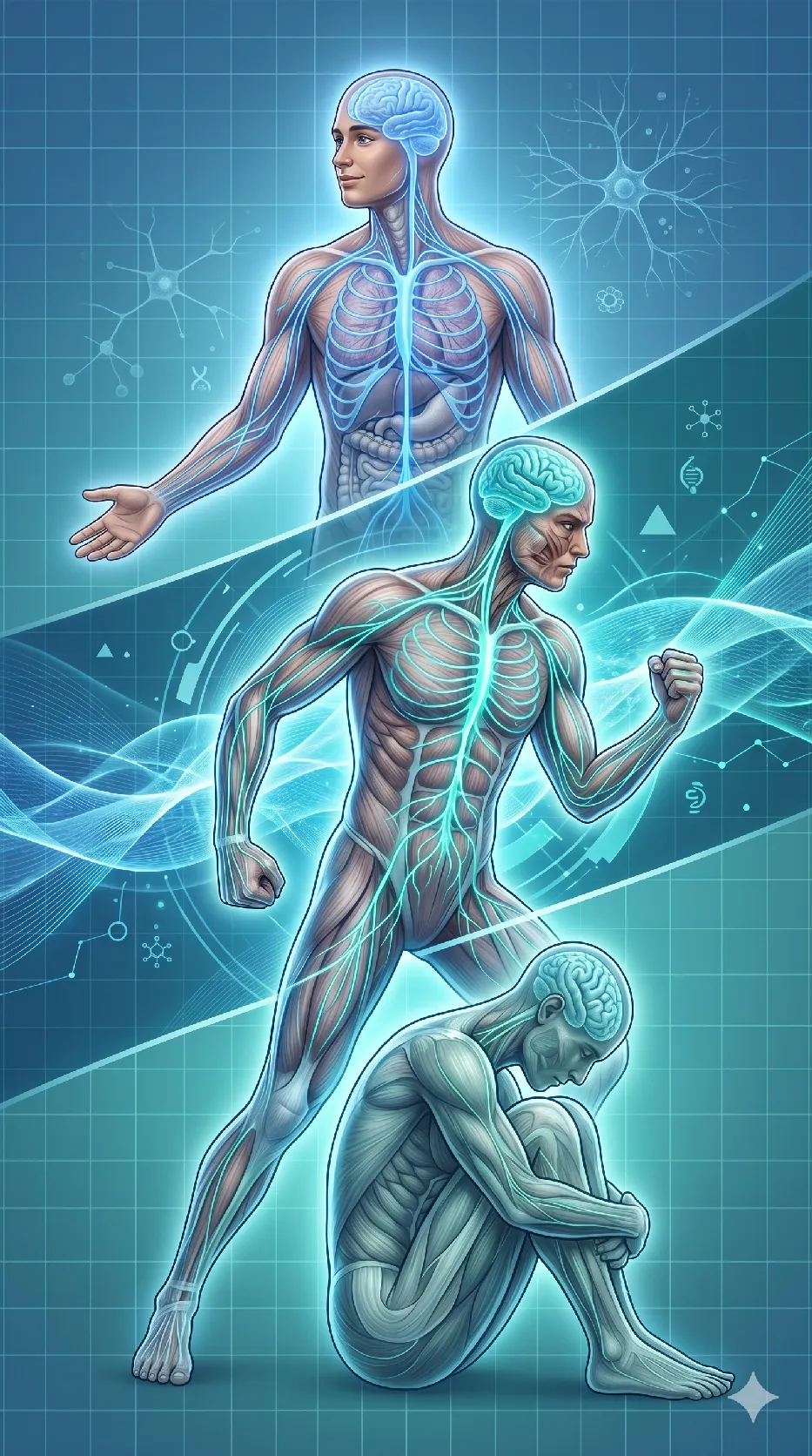
Polyvagal Theory expands upon this model by describing a hierarchy of nervous system states that influence how people think, feel, communicate, and respond to the world around them.
According to Polyvagal Theory, the nervous system constantly evaluates whether an environment is safe, dangerous, or life-threatening. These evaluations happen automatically and often outside conscious awareness.
The three primary states include:
Ventral Vagal State
The state of safety, connection, learning, healing, and social engagement.
Sympathetic State
The state of mobilization, stress, anxiety, fight, or flight.
Dorsal Vagal State
The state of shutdown, withdrawal, collapse, or conservation. The state a patient is in influences how they move, communicate, heal, and respond to care.
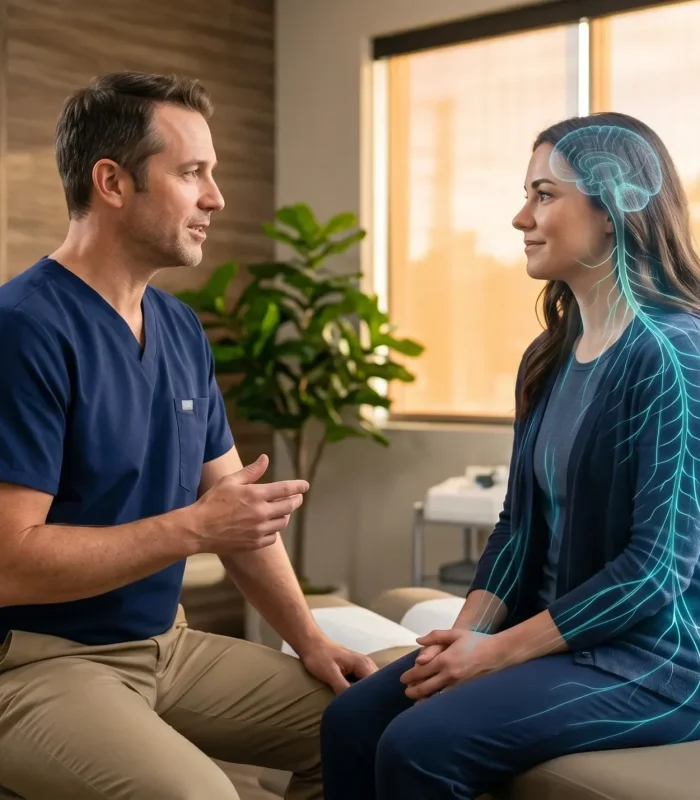
Why Polyvagal Theory Matters To Chiropractors
Chiropractors have always focused on the nervous system.
However, much of chiropractic education has traditionally emphasized structure, biomechanics, and movement.
Polyvagal Theory provides a deeper understanding of the physiological state of the person receiving care.
A patient may arrive at your office experiencing:
- Chronic stress
- Anxiety
- Burnout
- Emotional overwhelm
- Sleep challenges
- Persistent tension
These experiences affect the nervous system’s ability to adapt. Polyvagal Theory helps explain why some patients appear stuck in protective patterns despite receiving technically excellent care.
Rather than viewing patients only through a structural lens, chiropractors can begin viewing them through a nervous system lens. This shift often changes how practitioners communicate, educate, and deliver care.
Understanding Neuroception
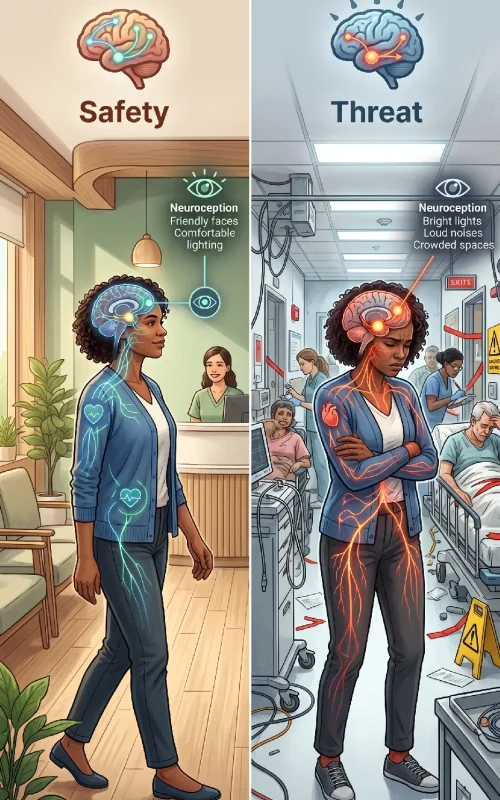
One of the most important concepts within Polyvagal Theory is neuroception. Neuroception is the nervous system’s unconscious process of detecting safety, danger, or life threat.
Before a patient consciously decides whether they trust you, their nervous system has already begun evaluating:
- Your tone of voice
- Facial expressions
- Body language
- Office environment
- Predictability
- Pace of interaction
These signals help determine whether the nervous system becomes more regulated or more defensive. This helps explain why two chiropractors can deliver the same adjustment while creating very different patient experiences. Neuroception influences how patients receive information, participate in care, and respond to treatment recommendations.
For chiropractors, understanding neuroception can dramatically improve patient communication and trust.

The Vagus Nerve and Chiropractic
The vagus nerve is one of the central components of Polyvagal Theory. It is the primary nerve of the parasympathetic nervous system and plays an important role in:
- Heart rate regulation
- Breathing
- Digestion
- Emotional regulation
- Social engagement
- Recovery processes
Polyvagal Theory emphasizes that the vagus nerve helps coordinate how people respond to safety and connection. Many chiropractors find this concept valuable because it provides a framework for understanding why patients often report changes beyond pain relief.
Patients frequently describe improvements in:
- Stress resilience
- Sleep quality
- Calmness
- Breathing
- Overall wellbeing
While chiropractic care should not be described as directly stimulating the vagus nerve, understanding vagal function helps chiropractors better appreciate the relationship between nervous system regulation and health.

How Polyvagal Theory Changes Chiropractic Communication
Communication is one of the most overlooked clinical skills in healthcare. Polyvagal Theory suggests that communication is more than information transfer. It is also a physiological experience.
Patients do not simply listen to words. They also respond to:
- Tone
- Rhythm
- Facial expression
- Presence
- Confidence
A patient who feels safe is more likely to:
- Ask questions
- Participate in care
- Follow recommendations
- Remain engaged in the process
This is why communication often becomes more effective when chiropractors understand Polyvagal Theory. The goal is not simply to educate patients. The goal is to create an experience where patients feel understood and supported.

How Polyvagal Theory Improves Patient Retention
Patient retention is often viewed as a marketing challenge. However, retention is frequently a relationship challenge. Patients stay where they feel:
- Safe
- Heard
- Understood
- Supported
When patients feel confused, overwhelmed, or disconnected, they are more likely to discontinue care. Polyvagal Theory helps chiropractors understand how trust develops.
As practitioners improve communication and create predictable experiences, patients often become more engaged in their care plans. Better retention is often a byproduct of stronger relationships and a more regulated patient experience.
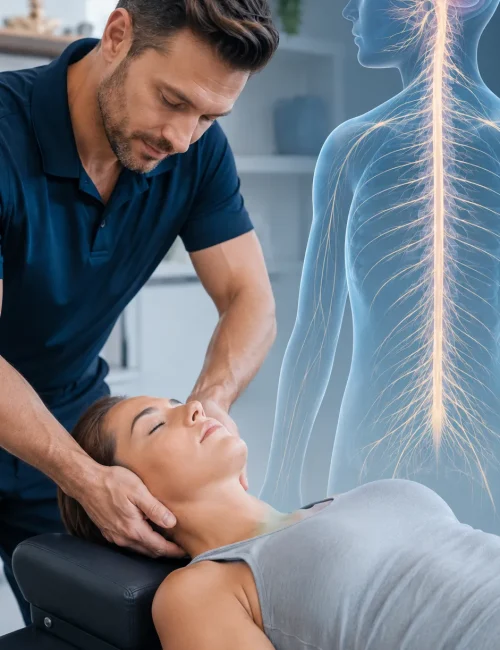
Polyvagal Theory and The Chiropractic Adjustment
Polyvagal Theory does not replace chiropractic.
Instead, it provides additional context for understanding the adjustment experience.
The adjustment remains an important clinical intervention.
However, the nervous system determines how the body interprets that experience.
When patients feel safe, their nervous systems are often more adaptable and responsive.
When patients feel threatened or defensive, protective patterns may persist.
Polyvagal Theory encourages chiropractors to consider both the adjustment and the environment surrounding the adjustment.
This perspective can help practitioners better understand variability in patient outcomes.

The MacDonald Safety Corridor Protocol
The MacDonald Safety Corridor Protocol is an educational framework developed to help chiropractors better understand how safety influences patient experiences before, during, and after care.
The protocol emphasizes creating an environment that supports regulation and adaptability. Rather than focusing solely on the adjustment itself, chiropractors are encouraged to consider:
- Communication
- Observation
- Patient state
- Environmental cues
- Follow-up interactions
The goal is to help patients move through care in a way that supports trust, connection, and nervous system regulation.

What Polyvagal Theory Means for the Future of Chiropractic
Healthcare is changing.
Patients today are often dealing with chronic stress, information overload, social disconnection, and nervous system dysregulation.
As a result, chiropractors are increasingly looking for frameworks that help explain what they observe in practice.
Polyvagal Theory offers a modern language for understanding many of the clinical experiences chiropractors have witnessed for decades. It helps bridge chiropractic philosophy, neuroscience, communication, and patient-centered care.
For chiropractors who want to better understand the relationship between the nervous system and health, Polyvagal Theory provides an invaluable lens through which to view practice.
To see how this shows up in the adjustment itself, read about the MacDonald Safety Corridor Protocol.
The Polyvagal Theory for Chiropractors
FREE 1-HOUR TRAINING
An Introduction to the Polyvagal Theory for Chiropractors.
Discover how understanding the nervous system transforms the way you adjust, communicate, and lead your practice.
Trusted by chiropractors seeking deeper patient connection and purpose-driven care.
How To Work With Us
Whether you want to learn, deepen your understanding, or transform your practice—there’s a path forward.
Understanding the Nervous System
Communicating Through Connection
Understanding the Body’s Signals
Techniques for Regulation
Frequently Asked Questions About Polyvagal Theory for Chiropractors
Learn more about Polyvagal Theory, nervous system regulation, chiropractic philosophy, patient communication, and Dr. Don MacDonald’s approach to chiropractic care.
What is Polyvagal Theory for chiropractors?
Polyvagal Theory for chiropractors is a framework that helps practitioners understand how the nervous system responds to safety, danger, and connection. It provides insight into patient behavior, communication, regulation, and adaptation.
How does Polyvagal Theory relate to chiropractic?
Polyvagal Theory helps chiropractors better understand nervous system regulation and how physiological state influences healing, communication, trust, and patient outcomes.
What is neuroception?
Neuroception is the nervous system’s unconscious process of detecting safety, danger, or life threat before conscious awareness.
What role does the vagus nerve play?
The vagus nerve helps regulate heart rate, breathing, digestion, social engagement, and recovery processes. It plays a central role in Polyvagal Theory.
Why do some patients respond differently to care?
Patients may have different levels of stress, nervous system regulation, and adaptability. Polyvagal Theory helps explain why similar care can produce different outcomes.
Does Polyvagal Theory improve patient communication?
Many chiropractors find that understanding Polyvagal Theory improves communication by helping them create experiences that feel safer, clearer, and more supportive for patients.
Can Polyvagal Theory improve patient retention?
Polyvagal Theory helps chiropractors better understand trust, connection, and patient engagement, which may contribute to stronger long-term relationships.
Is Polyvagal Theory evidence-based?
Polyvagal Theory is based on decades of research conducted by Dr. Stephen Porges and continues to influence fields including neuroscience, trauma therapy, psychology, healthcare, and chiropractic.
What is nervous system regulation?
Nervous system regulation refers to the body’s ability to adapt to challenges while maintaining balance, flexibility, and resilience.
What is Polyvagal Chiropractic?
Polyvagal Chiropractic is an approach that integrates chiropractic care with insights from Polyvagal Theory to better understand nervous system regulation, communication, and patient outcomes.