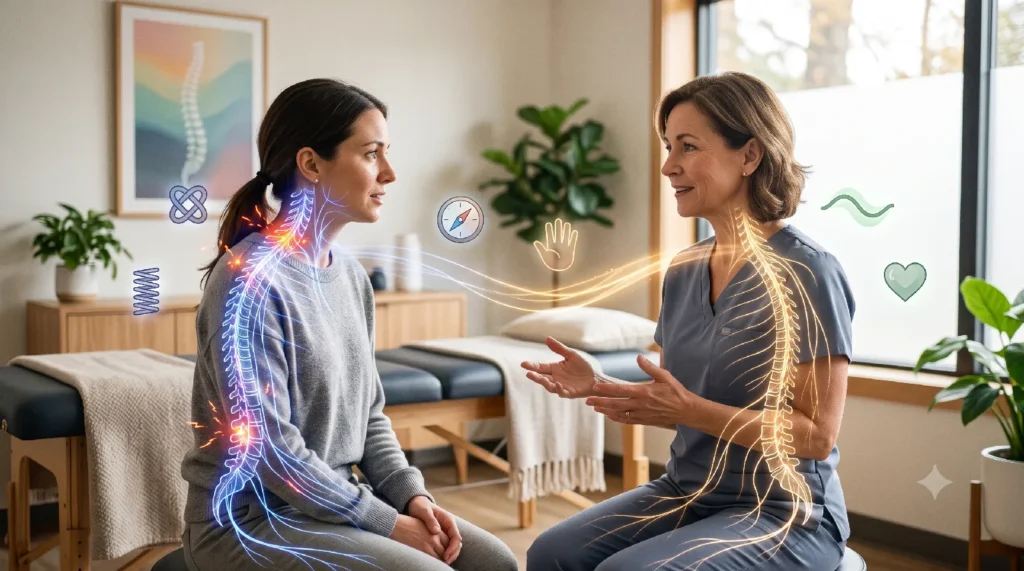
In this episode, Dr. Don MacDonald explores how Polyvagal Chiropractic principles can improve patient outcomes through nervous system regulation, movement, communication, and patient-centered chiropractic care.
What Is Polyvagal Chiropractic?
Polyvagal Chiropractic is an approach that combines traditional chiropractic principles with modern understanding of the nervous system. Rather than viewing the adjustment as a purely mechanical correction, Polyvagal Chiropractic recognizes that every adjustment is also a neurological experience.
The nervous system is constantly evaluating safety, threat, connection, and environmental cues. When the body perceives safety, it becomes more adaptable and responsive. When it perceives threat, it shifts toward protection and survival.
Polyvagal Chiropractic helps chiropractors better understand how regulation, communication, and neuroception influence patient outcomes. It provides a framework for understanding why some patients respond quickly to care while others remain stuck in protective patterns despite receiving technically sound adjustments.
By understanding the nervous system through a Polyvagal lens, chiropractors can create experiences that support regulation, connection, and lasting change.
The Five Pillars of Polyvagal Chiropractic
The foundation of Polyvagal Chiropractic is built upon five interconnected pillars that help chiropractors understand how the nervous system influences healing and adaptation.
Nervous System Regulation
Regulation is the body’s ability to adapt to changing circumstances while maintaining stability. A regulated nervous system can respond appropriately to challenges without becoming overwhelmed.
Neuroception
Neuroception is the nervous system’s unconscious process of detecting safety or danger. Before a patient consciously evaluates an experience, their nervous system has already begun making predictions about whether the environment is safe.
Connection
Human beings are wired for connection. Patients often experience better outcomes when they feel seen, heard, and understood. Therapeutic relationships influence physiology more than many practitioners realize.
Communication
Every interaction in the office communicates information to the nervous system. Tone of voice, body language, pacing, and explanation all contribute to the patient’s experience of safety.
Chiropractic Adjustment
The adjustment remains a powerful clinical tool. However, its impact is often amplified when delivered within an environment that supports nervous system regulation and adaptive change.
Why Patient Outcomes Improve When The Nervous System Feels Safe
Many chiropractors have observed that two patients can receive the same adjustment and experience completely different outcomes.
Polyvagal Theory helps explain why.
When the nervous system perceives safety, it becomes more flexible and responsive. Muscles relax more easily. Breathing improves. Movement becomes more coordinated. Recovery processes function more efficiently.
Conversely, when the nervous system perceives danger, resources shift toward protection and survival. Patients may remain tense, guarded, and resistant to change despite receiving appropriate care.
This understanding helps chiropractors move beyond a purely structural model and appreciate the role that regulation plays in healing.
Common Mistakes Chiropractors Make When Focusing Only On Structure
Traditional chiropractic education often focuses heavily on biomechanics, alignment, and technique. While these factors remain important, they do not tell the entire story.
Many patients arrive in practice carrying chronic stress, emotional overwhelm, and nervous system dysregulation.
When practitioners focus exclusively on structure, they may overlook the physiological state of the person receiving care.
Polyvagal Chiropractic encourages chiropractors to consider both structure and state. It recognizes that lasting results often require addressing how the nervous system interprets and responds to the adjustment experience.
Practical Applications for Today’s Chiropractor
Chiropractors can begin applying these principles immediately.
Simple changes such as slowing down communication, improving patient education, creating predictable office experiences, and becoming more aware of nervous system cues can significantly improve the patient experience.
Polyvagal Chiropractic is not about replacing chiropractic principles. It is about enhancing them through a deeper understanding of human physiology and nervous system regulation.
As chiropractors continue to integrate these concepts, they may discover new ways to improve patient outcomes, strengthen relationships, and create more meaningful clinical experiences.
Key Takeaways From This Episode
Polyvagal Chiropractic helps explain why some patients improve quickly while others struggle to maintain progress. In this episode, Dr. Don MacDonald explores the five pillars of Polyvagal Chiropractic and how nervous system regulation, communication, neuroception, and patient-centered care can dramatically influence patient outcomes.
In this episode:
- What we’ve been up to since the last episode aired.
- What made the previous episode with Heidi Haavik so great?
- The importance of using objective measurements in chiropractic care.
- What I spoke about in Australia recently and why it matters.
- Why the time frame of chiropractic care makes a significant difference in outcomes.
- How movement acts as a summer switch, and why we need optimal movement.
- How mapping and helping a body identify its position in space are so critical.
- The way our nervous systems are wired to be in a protective state.
- How supporting a state of ease in the global system actually changes lives.
- What is the goal of initial chiropractic care for dysregulated people?
- What the “window of tolerance” is and how you can increase it.
- Where we went in Australia and what made it an especially exciting visit.
- How the Calgary event brought chiropractors together in a positive and impactful way.
- Why opening more chiropractic schools is so important, especially now.
- What we have planned for the summer, including ways you can get involved.
These Polyvagal Chiropractic principles help chiropractors better understand healing, regulation, movement, and patient trust.
Frequently Asked Questions About Polyvagal Chiropractic
Polyvagal Chiropractic combines chiropractic care with modern understanding of nervous system regulation, helping chiropractors better understand safety, adaptation, and patient outcomes.
Polyvagal Theory explains how the nervous system detects safety and threat. Chiropractors can use these principles to better understand patient responses to care.
Patients with more regulated nervous systems often adapt more quickly. Factors such as stress, safety, communication, and neuroception can influence outcomes.
Neuroception is the nervous system’s unconscious process of detecting safety, danger, or life threat before conscious awareness.
Yes. Understanding nervous system regulation often helps chiropractors communicate more effectively and build stronger therapeutic relationships.
No. It builds upon traditional chiropractic principles by adding a deeper understanding of nervous system function and regulation.
Continue Learning
- The MacDonald Safety Corridor Protocol
- What Is Polyvagal Chiropractic?
- Polyvagal Theory for Chiropractors
- Nervous System Regulation
- Neuroception for Chiropractors
- Vagus Nerve and Chiropractic Care
- Chiropractic Communication
- Patient Retention and Trust

- Pelvic Floor Chiropractic: Pelvis, Fascia & Nervous System - August 30, 2026
- Women’s Health and Pelvic Floor Care in Chiropractic Practice - August 4, 2026
- How to Teach Neuroception Simply in Practice - July 16, 2026