
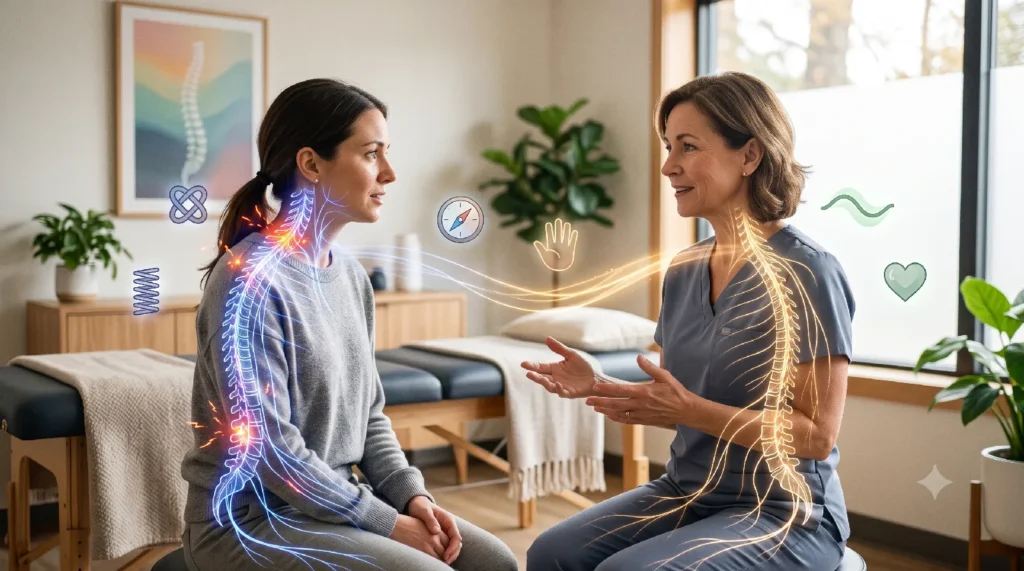
A nervous-system-centered approach to helping patients receive and integrate chiropractic care.
A patient walks in late, shoulders up around their ears, jaw tight, eyes scanning the room, and then says, “I just need to get adjusted.”
Most chiropractors have lived that moment.
You can deliver a skillful adjustment, but if the person in front of you is bracing against the experience, the input often lands differently.
That is why learning how to improve adjustment readiness matters so much.
It is not about making care softer or slower. It is about understanding when the body is available to receive change.
Over the years, I have found that adjustment readiness is less about technique preference and more about state.
Two people can present with the same complaint, the same posture, and even the same segmental findings, yet respond very differently.
One settles, breathes, and integrates.
The other tenses, startles, and leaves with only a partial shift.
If we only look at structure, that difference can seem confusing.
If we look through the lens of the nervous system, it starts to make much more sense.
What Adjustment Readiness Really Means
Adjustment readiness is the degree to which a person can receive, process, and adapt to the input of an adjustment.
Chiropractic is not simply something done to a spine.
It is an interaction with a living nervous system that is constantly asking:
“Is this safe enough and relevant enough to respond to?”
That question is influenced by:
- Stress levels
- Sleep quality
- Breathing patterns
- Previous healthcare experiences
- Environmental cues
- Communication style
- Current nervous system state
Readiness is not a personality trait.
It is a moment-to-moment expression of how organized a person’s physiology is when they receive care.
Why Nervous System State Matters
Many chiropractors have been trained to focus primarily on biomechanics.
Biomechanics matter.
However, biomechanics always occur within a living nervous system.
When a person arrives in a highly defensive physiological state, their body may be less available for change.
Common signs include:
- Rapid speech
- Shallow breathing
- Excessive tension
- Hypervigilance
- Startling easily
- Difficulty relaxing
These are not signs of a difficult patient.
They are signs that the nervous system may still be prioritizing protection.
Start With Connection Before Correction
One of the simplest ways to improve adjustment readiness is to create connection before attempting correction.
A nervous system that does not feel met often does not soften simply because the doctor is technically skilled.
Sometimes thirty extra seconds can change everything.
Examples include:
- A grounded greeting
- Slowing your pace
- Making eye contact
- Asking thoughtful questions
- Listening before explaining
From a Polyvagal perspective, these moments provide cues of safety that help activate the social engagement system.
As safety increases, breathing often deepens, muscle tension decreases, and patients become more available to receive care.
Use Pacing as a Clinical Tool
Pacing is one of the most overlooked clinical skills in chiropractic.
Some patients need momentum.
Others need space.
If a person already feels overwhelmed, moving too quickly can increase defensive responses.
Consider slowing down:
- While explaining procedures
- During positioning
- Before delivering an adjustment
- While transitioning between steps
Often it is not the adjustment that changes.
It is the context surrounding the adjustment.
And context matters.
Breath Reveals Readiness
Breath provides one of the quickest windows into nervous system state.
Observe:
- Is the patient holding their breath?
- Are they breathing high into the chest?
- Do they appear braced?
A simple invitation to exhale naturally can often reduce unnecessary tension.
The goal is not perfect breathing mechanics.
The goal is helping the body move out of defensive bracing and into a more adaptable state.
The Role of Predictability and Trust
Trust reduces defensive load.
Patients generally respond better when they know:
- What is happening
- Why it is happening
- What to expect
This is especially important for people who have experienced stress, trauma, overwhelm, or negative healthcare experiences.
Clear communication creates predictability.
Predictability helps create safety.
Safety improves readiness.
Your Nervous System Matters Too
Adjustment readiness is not only about the patient.
It is also about the chiropractor.
Patients constantly read cues from:
- Tone of voice
- Facial expression
- Body language
- Pacing
- Presence
A rushed doctor creates a different clinical environment than a regulated doctor.
Co-regulation is not a trend.
It is a clinical reality.
Sometimes the most useful thing a chiropractor can do before entering the room is take one slow breath.
When Technique Is Not the Main Problem
Chiropractors love discussing technique.
And technique matters.
However, what appears to be a technique issue is often a readiness issue.
Examples include:
- Patients who cannot relax during side posture
- Patients who startle easily
- Patients who leave feeling agitated
- Patients who struggle to integrate care
The answer is not always a different adjustment.
Sometimes the answer is a different approach to preparing the nervous system.
How to Improve Adjustment Readiness Between Visits
Readiness is influenced by life outside the office.
Factors that affect adaptability include:
- Sleep quality
- Physical activity
- Nutrition
- Stress levels
- Screen exposure
- Social connection
- Recovery habits
Helping patients recognize these influences can improve their ability to receive and integrate care over time.
This shifts the conversation from symptom chasing to health creation.
A Better Question in the Adjusting Room
Instead of asking:
“Did the adjustment work?”
Consider asking:
“How ready was this person to receive it?”
That question changes everything.
It changes what you notice.
It changes how you communicate.
It changes how you pace care.
And often, it changes outcomes.
The adjustment can be a powerful input.
However, the body still decides what to do with that input.
The more chiropractors understand readiness, regulation, trust, and safety, the more effective their care becomes.
Frequently Asked Questions About Adjustment Readiness
What is adjustment readiness in chiropractic care?
Adjustment readiness refers to how prepared a patient’s nervous system is to receive, process, and adapt to chiropractic care. It involves factors such as stress levels, safety, trust, communication, and physiological state.
Why do some patients respond better to chiropractic adjustments?
Patients often respond differently because of differences in nervous system regulation, stress load, sleep quality, emotional state, and overall adaptability rather than structural findings alone.
How does Polyvagal Theory relate to adjustment readiness?
Polyvagal Theory helps explain how feelings of safety or threat influence a person’s physiological state. Patients who feel safer and more connected are often more able to receive and integrate chiropractic care.
Can communication improve chiropractic outcomes?
Yes. Clear communication, trust, predictability, and a calm clinical environment can help reduce defensive responses and improve adjustment readiness.
What are signs that a patient is not ready for an adjustment?
Common signs include shallow breathing, excessive muscle tension, rapid speech, difficulty relaxing, hypervigilance, and heightened startle responses.
Does a chiropractor’s state affect patient outcomes?
Yes. Patients respond not only to the adjustment itself but also to the chiropractor’s tone, presence, pacing, and overall nervous system regulation.
How can patients improve adjustment readiness between visits?
Improving sleep, managing stress, engaging in regular movement, maintaining social connection, and supporting overall nervous system regulation can improve readiness over time.
What is the relationship between trust and adjustment readiness?
Trust reduces defensive load and helps create a sense of safety. When patients trust their chiropractor and understand the process, they are often better able to receive and benefit from care.
Continue Learning
- The MacDonald Safety Corridor Protocol
- What Is Polyvagal Chiropractic?
- Polyvagal Theory for Chiropractors
- Nervous System Regulation
- Neuroception for Chiropractors
- Vagus Nerve and Chiropractic Care
- Chiropractic Communication

- Pelvic Floor Chiropractic: Pelvis, Fascia & Nervous System - August 30, 2026
- Women’s Health and Pelvic Floor Care in Chiropractic Practice - August 4, 2026
- How to Teach Neuroception Simply in Practice - July 16, 2026