A patient once said to me, “I came in for neck pain, but what surprised me was that I felt more like myself again.”
That observation has stayed with me for years.
Many chiropractors have heard similar stories. A patient starts sleeping better. They feel calmer in stressful situations. They have more patience with their family. They breathe easier. Sometimes they simply say they feel more like themselves.
These experiences raise an important question:
What is the relationship between chiropractic and emotional wellbeing?
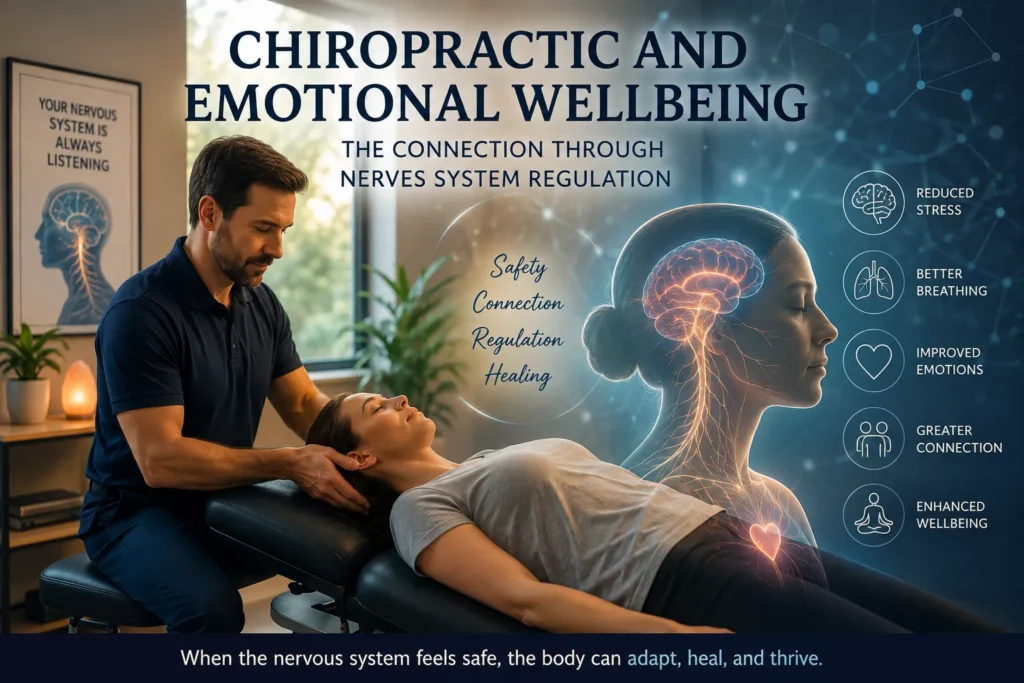
While chiropractic care is not a treatment for emotional conditions, it may play an important role in helping people move toward greater nervous system regulation, resilience, and adaptability.
Understanding this relationship can help chiropractors provide more meaningful care while helping patients better understand their own healing process.
Why Chiropractic and Emotional Wellbeing Matter
Human beings are not simply collections of joints, muscles, and bones.
We are living systems.
Physical experiences, emotional experiences, stress, sleep quality, relationships, nutrition, injuries, and environment all influence how the nervous system functions.
A difficult conversation can increase muscle tension.
Poor sleep can affect pain sensitivity.
Chronic stress can change posture, breathing patterns, and movement quality.
When we begin to view patients through this broader lens, chiropractic becomes more than structural correction. It becomes part of a larger conversation about adaptation, regulation, and wellbeing.
This does not mean chiropractic treats emotions.
It means emotions, physiology, and nervous system function are interconnected.
The Nervous System Is Listening All the Time
One of the most important insights from modern neuroscience is that the nervous system is constantly evaluating the environment.
This evaluation happens automatically.
Patients may arrive at your office carrying:
- Work stress
- Family pressures
- Financial concerns
- Health anxiety
- Poor sleep
- Chronic pain
- Previous healthcare experiences
All of these factors can influence how their nervous system responds to care.
This is why two patients receiving the same adjustment may experience very different outcomes.
The nervous system is not only responding to the adjustment itself.
It is responding to the entire experience.
How Stress Changes the Body
Stress is not only psychological.
Stress is physiological.
When stress becomes chronic, the body often adapts in predictable ways:
- Increased muscle tension
- Restricted breathing patterns
- Heightened vigilance
- Reduced adaptability
- Digestive changes
- Poor recovery
- Increased pain sensitivity
These responses are not signs that the body is broken.
They are signs that the body is attempting to protect itself.
The challenge occurs when protective responses remain active long after they are needed.
This is where many chiropractors begin to notice the connection between nervous system regulation and patient outcomes.
The Role of Polyvagal Theory in Chiropractic Care
Polyvagal Theory, developed by Dr. Stephen Porges, provides a framework for understanding how the nervous system responds to safety and threat.
According to Polyvagal Theory, the nervous system constantly evaluates whether the environment feels:
- Safe
- Dangerous
- Life threatening
These evaluations influence:
- Breathing
- Muscle tone
- Heart rate
- Attention
- Emotional regulation
- Social engagement
For chiropractors, Polyvagal Theory helps explain why safety matters so much in clinical practice.
Patients do not simply think their way into feeling safe.
They experience safety through the body.
Tone of voice, communication, pacing, touch, environment, and predictability all influence how the nervous system responds.
How Adjustments May Support Emotional Wellbeing
Many patients report feeling:
- Calmer
- Lighter
- More relaxed
- Clearer mentally
- Better able to handle stress
after receiving chiropractic care.
While not every patient experiences these changes, they are common enough that many chiropractors have observed them throughout their careers.
A chiropractic adjustment may influence:
- Body awareness
- Movement quality
- Muscle tension
- Breathing patterns
- Autonomic regulation
When these systems become more adaptable, patients often describe feeling better both physically and emotionally.
The goal is not to create emotional releases.
The goal is to improve adaptability.
Fascia, Posture, and Adaptive Patterns
Fascia research has provided chiropractors with new ways of understanding how the body organizes itself.
People do not simply hold posture mechanically.
They organize around:
- Habits
- Injuries
- Expectations
- Stress
- Previous experiences
Many patients arrive with elevated shoulders, shallow breathing, jaw tension, and rigid movement patterns.
These patterns often represent adaptation rather than dysfunction.
Instead of asking:
“Why does this keep happening?”
A more useful question may be:
“What is this person adapting to?”
That shift often leads to deeper clinical insight and greater compassion.
Better Conversations About Stress and Health
Many chiropractors want to discuss stress with patients but worry about stepping outside their professional role.
The solution is not to become a therapist.
The solution is to become more observant.
Simple questions can create meaningful conversations:
- “Have you noticed your body staying on high alert lately?”
- “How has stress been affecting you physically?”
- “Does it feel difficult to fully relax?”
- “How has your sleep been recently?”
These conversations help patients feel seen.
They also provide context for understanding their symptoms and healing process.
What This Means for Modern Chiropractors
Viewing patients through a nervous system lens changes practice.
It changes:
- Communication
- Scheduling
- Patient education
- Office environment
- Team interactions
- Clinical decision making
The most effective chiropractors are often not the ones with the largest technique toolbox.
They are the ones who consistently create:
- Safety
- Clarity
- Trust
- Connection
- Predictability
These qualities help patients feel supported and engaged in their care.
The Future of Chiropractic and Emotional Wellbeing
The future of chiropractic may involve a deeper integration of:
- Neuroscience
- Polyvagal Theory
- Communication
- Patient-centered care
- Nervous system regulation
Patients today are looking for more than symptom relief.
They want to understand themselves.
They want to feel heard.
They want to feel safe.
When chiropractors understand the relationship between nervous system regulation and emotional wellbeing, they are better equipped to help patients navigate both health challenges and life challenges.
This does not replace chiropractic principles.
It expands them.
And in many cases, it creates more meaningful outcomes for both practitioner and patient.
Frequently Asked Questions
What is emotional wellbeing?
Emotional wellbeing is the ability to regulate emotions, recover from stress, maintain healthy relationships, and adapt to life’s challenges.
Can chiropractic care improve emotional wellbeing?
Chiropractic care does not treat emotional conditions directly, but many patients report improvements in stress levels, relaxation, sleep quality, and overall wellbeing after care.
How does stress affect the nervous system?
Chronic stress can influence breathing patterns, muscle tension, posture, digestion, sleep, pain sensitivity, and overall adaptability.
What is the connection between Polyvagal Theory and chiropractic?
Polyvagal Theory helps chiropractors understand how safety, connection, and nervous system regulation may influence patient outcomes.
Why do some patients feel emotionally different after an adjustment?
Changes in nervous system state may influence awareness, relaxation, breathing, and a person’s sense of wellbeing.
What role does the vagus nerve play in emotional wellbeing?
The vagus nerve supports regulation, recovery, digestion, social engagement, and emotional resilience.
How can chiropractors discuss stress with patients?
Chiropractors can use simple, observational language that helps patients connect physical symptoms with life experiences without stepping outside their professional role.
Continue Learning
- The MacDonald Safety Corridor Protocol
- What Is Polyvagal Chiropractic?
- Polyvagal Theory for Chiropractors
- Nervous System Regulation
- Neuroception for Chiropractors
- Vagus Nerve and Chiropractic Care
- Chiropractic Communication

- Trend Lines: The Chiropractic Communication Skill That Keeps Practice Members in Care - October 12, 2026
- Pelvic Floor Chiropractic: Pelvis, Fascia & Nervous System - August 30, 2026
- Women’s Health and Pelvic Floor Care in Chiropractic Practice - August 4, 2026