

Understanding the Connection Between the Pelvis, Fascia and Nervous System
The pelvis is often discussed in terms of structure, alignment and movement. But what happens when we begin looking at the pelvis through a broader chiropractic lens—one that also considers fascia, the pelvic floor and the nervous system?
For many chiropractors, the pelvic floor can feel like an area that sits just outside the traditional clinical conversation. Yet patients regularly present with challenges involving the pelvis, hips, tailbone, movement and pelvic health.
That raises an important question:
Could understanding the pelvic floor give chiropractors another way to understand the people sitting in front of them?
For Dr. Lauren Rose, the answer began to emerge after she started seeing more patients with pelvic floor and tailbone challenges and realized that the tools she already had did not always give her enough ways to work with those presentations.
Her experience led her to explore a more comprehensive approach to pelvic floor chiropractic care, including the relationship between the pelvis, fascia and nervous-system regulation.
What Is Pelvic Floor Chiropractic?
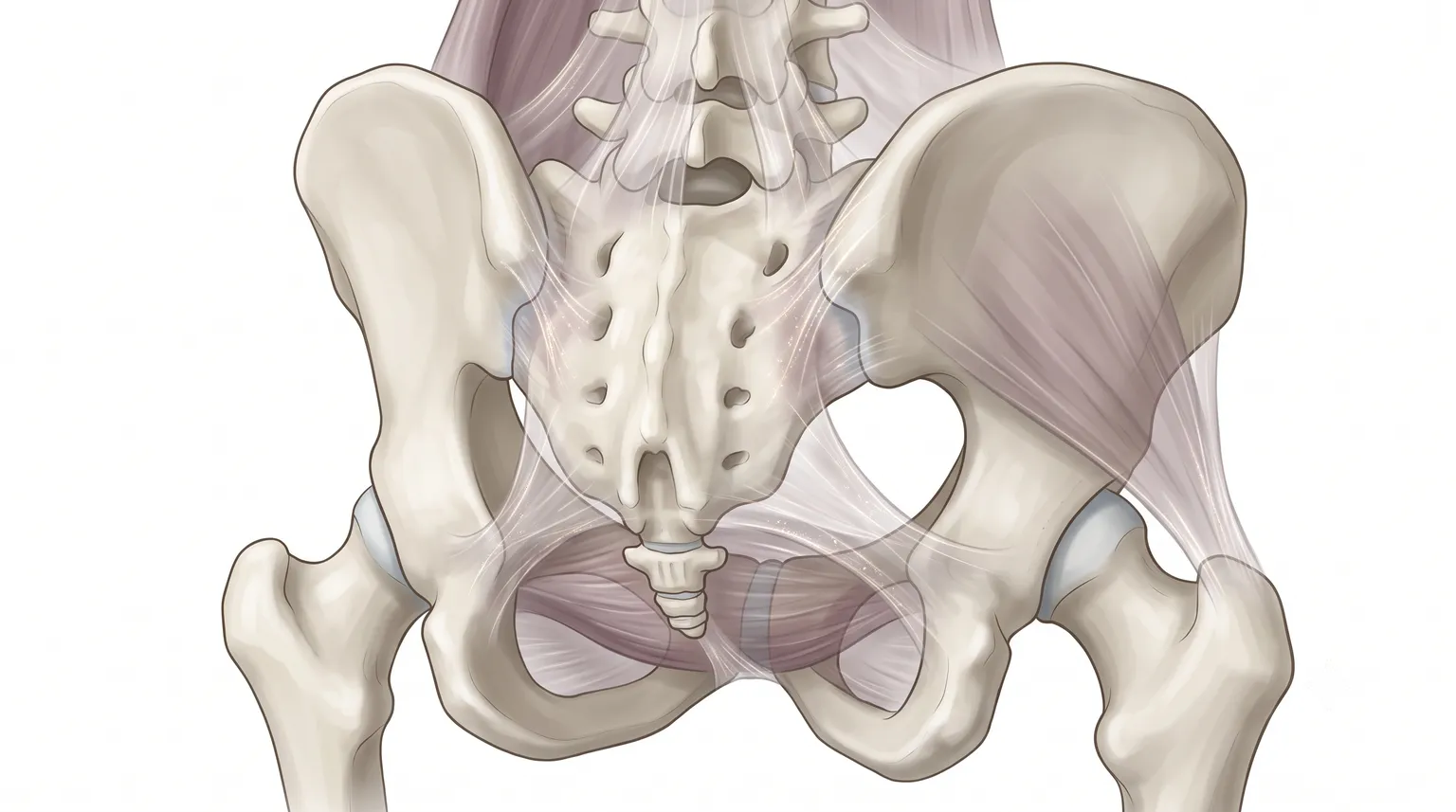
Pelvic floor chiropractic is an approach that considers the pelvic region as part of the body’s larger musculoskeletal and neurological system rather than treating it as an isolated area.
The pelvic floor is connected to the pelvis, hips, abdomen and surrounding fascial structures. It also exists within a nervous system that constantly responds to movement, pressure, touch, environment and perceived safety.
For chiropractors, this creates an opportunity to ask broader clinical questions.
Rather than looking only at one joint or one region, we can become more curious about how different parts of the body are interacting.
How is the pelvis moving?
How are the surrounding tissues responding?
How does the patient experience movement in that area?
And perhaps most importantly, how does the nervous system respond to the input we provide?
This does not mean replacing traditional chiropractic care. In Dr. Lauren’s experience, pelvic floor work became another way of working within the chiropractic approach she already used. She describes being able to communicate to patients that the work was still connected to chiropractic care and the broader goal of influencing the nervous system.
Why Are Chiropractors Paying More Attention to the Pelvic Floor?
One reason is simple: patients are presenting with pelvic and tailbone challenges.
Before attending Dr. Don MacDonald’s pelvic floor seminar in Calgary, Dr. Lauren already knew how to work with certain pelvic structures, including the pubic bone. But she began seeing more patients with tailbone problems, particularly male patients, and recognized that she wanted a broader clinical approach.
That experience is important because clinical education often begins with a problem we repeatedly encounter in practice.
A chiropractor may have a patient who continues to experience discomfort around the tailbone.
Another patient may have difficulty with movement around the hips and pelvis.
Another may describe pelvic floor symptoms that do not seem to fit neatly into the chiropractor’s existing clinical framework.
Instead of immediately assuming that another technique is required, it can be useful to step back and ask:
What else could be contributing to the way this person is moving and responding?
That question opens the door to considering the pelvic floor, surrounding fascia and nervous system as part of a larger system.
The Pelvic Floor Is More Than a Single Muscle Group
When people hear “pelvic floor,” they may imagine a small, isolated group of muscles.
Clinically, however, the pelvis is part of a much larger network of tissues and movement relationships.
The pelvic floor interacts with surrounding structures and participates in movement and load management throughout the pelvis and trunk.
This is where fascia becomes an interesting part of the conversation.
Dr. Don and Dr. Lauren discuss how the quality and mobility of fascial tissue can influence how the pelvis and surrounding structures move. They also talk about how changes in tissue tone can be perceived during clinical work.
For a chiropractor, this creates another layer of observation.
Instead of asking only:
“What is out of position?”
we can also ask:
“How is this tissue moving, and how is the nervous system responding to the input?”
That shift does not require abandoning biomechanics.
It simply adds another lens.
Pelvic Floor, Fascia and the Nervous System
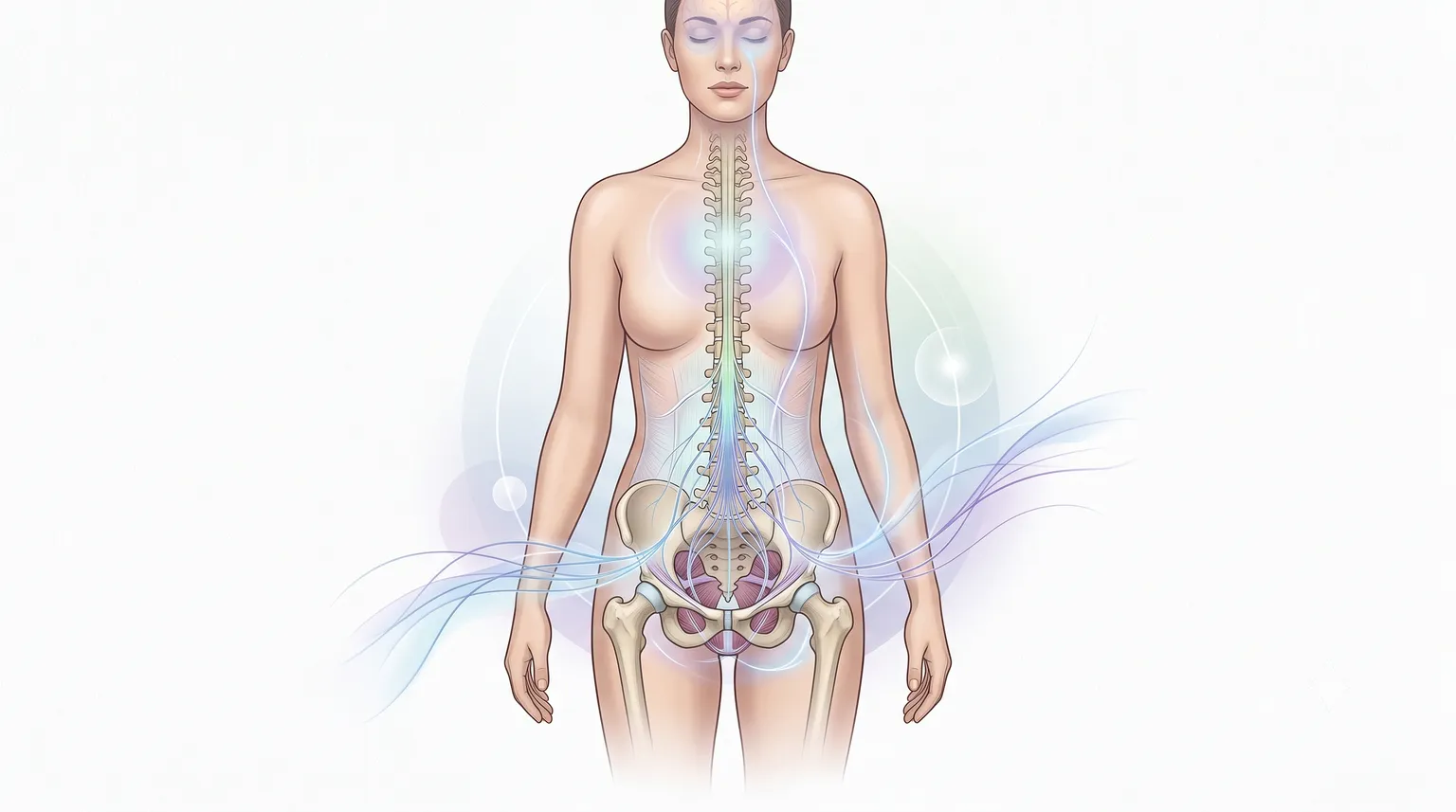
One of the most interesting themes in Dr. Don’s work is the connection between chiropractic care and nervous-system regulation.
The nervous system is not separate from the musculoskeletal system. Every adjustment, movement, touch stimulus and change in body position occurs within a nervous system that is constantly processing information.
That means the patient’s response matters.
Two people can receive similar input and respond differently.
One may relax easily.
Another may brace.
One may notice an immediate change in movement.
Another may need more time and repetition.
This is one reason Dr. Lauren was surprised by how differently she began thinking about pelvic floor work after the seminar. She initially expected to add a few more adjustments to her clinical toolbox. Instead, she found herself applying the broader approach much more frequently.
The lesson is bigger than pelvic floor care.
The more we understand the nervous system, the more carefully we can interpret the patient’s response to care.
The Tailbone and Pelvic Floor Connection
Tailbone or coccyx-related complaints can be frustrating for both patients and chiropractors.
The coccyx sits at the base of the spine and forms part of the larger pelvic region. When a patient presents with persistent tailbone discomfort, simply focusing on the coccyx itself may not always provide the complete clinical picture.
This was one of the reasons Dr. Lauren became interested in expanding her approach.
She had begun seeing male patients with tailbone complaints and felt that a quick tailbone adjustment did not always give her enough options to explore the problem more fully.
After learning the pelvic floor approach, she began applying it with some of these patients and observed changes in how they reported feeling after care.
These are individual clinical experiences, not a guarantee of outcome. But they can still be valuable because they encourage chiropractors to become more curious about the relationship between the tailbone, pelvis, surrounding tissues and nervous system.
Pelvic Floor Chiropractic Does Not Have to Replace Chiropractic Care
One concern a chiropractor may have when learning about pelvic floor work is whether it takes them outside their existing clinical identity.
Dr. Lauren’s experience suggests the opposite.
She describes being able to explain pelvic floor work to patients as another part of the chiropractic approach rather than something completely separate from it.
That distinction matters.
Continuing education does not always mean throwing away what you already know.
Sometimes it means adding another lens that helps you understand a patient more completely.
The spine is still important.
Movement is still important.
Adjusting is still important.
But the pelvis, fascia and nervous system can also become part of the conversation.
What Does Pelvic Floor Care Have to Do With Nervous-System Regulation?
This is where the approach becomes particularly interesting.
Every clinical interaction occurs within a nervous system.
The patient is not simply a collection of joints, muscles and tissues. They arrive with a history, expectations, stressors, movement patterns and previous experiences with healthcare.
Their nervous system is also responding to the environment around them.
The clinician’s voice.
The pace of the appointment.
The way the patient is positioned.
The quality of touch.
The predictability of what happens next.
And the patient’s perception of what is happening.
For chiropractors who use a Polyvagal-informed approach, these factors can become part of the clinical environment rather than being treated as unrelated to the adjustment.
This is consistent with the broader philosophy Dr. Don has discussed throughout The Informed Chiropractor: the input matters, but the state in which the input is received matters too.
The Chiropractor’s State Matters Too
There is another side of nervous-system regulation that is easy to overlook.
The chiropractor.
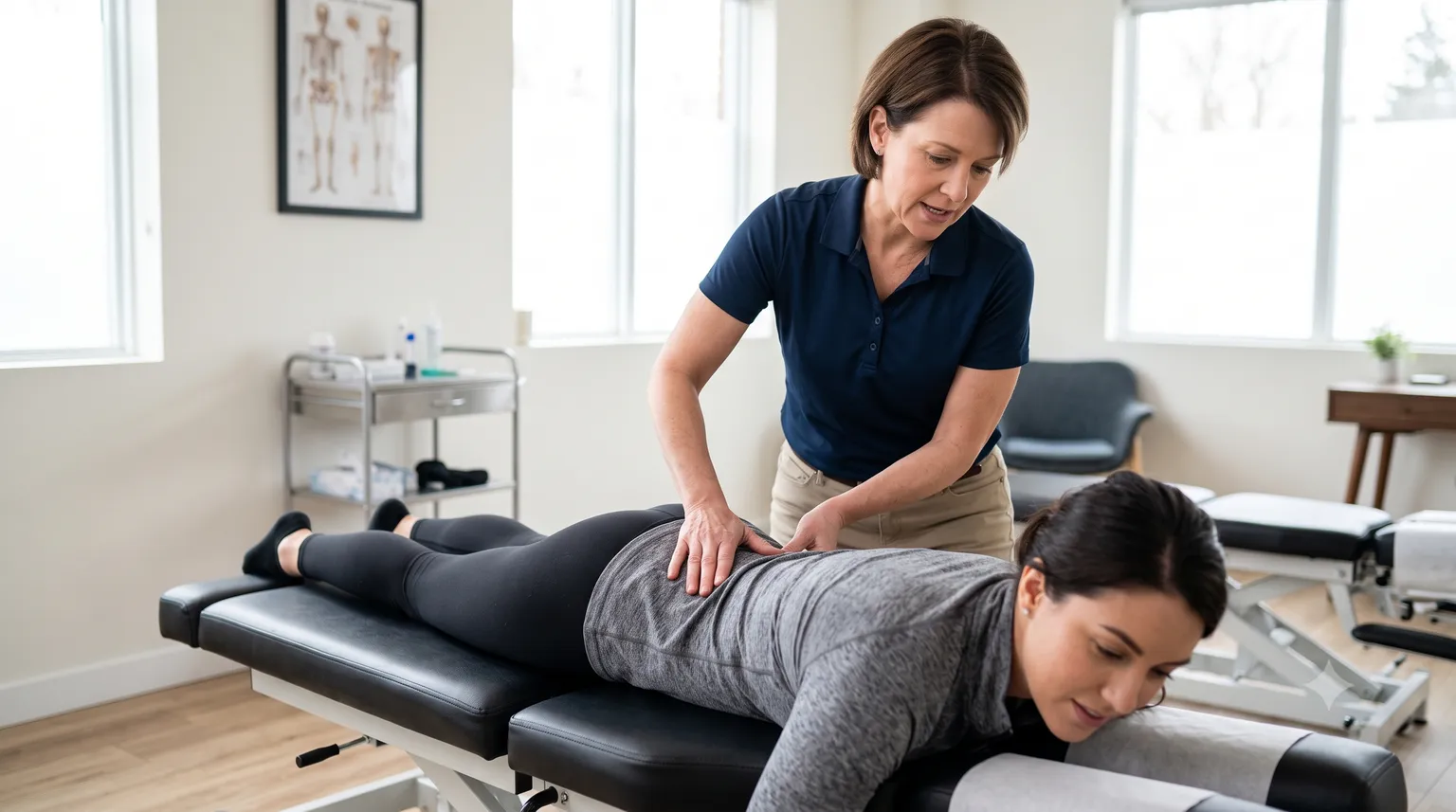
Dr. Lauren talks about the importance of exercise, self-care and maintaining a positive state before working with patients. The conversation also returns to co-regulation and the idea that the chiropractor’s own state can influence the experience in the adjusting room.
That is particularly relevant when working with areas such as the pelvis and pelvic floor, where communication, trust and patient comfort can be especially important.
The goal is not to become perfectly regulated.
No chiropractor is calm and centered every second of every day.
The goal is awareness.
Before working with a patient, ask:
What state am I bringing into this room?
Am I rushed?
Distracted?
Frustrated?
Present?
Curious?
The answer can change the quality of the interaction.
Start With Curiosity Rather Than Technique
One of the most useful lessons from Dr. Lauren’s experience is that clinical growth does not always begin with learning another technique.
Sometimes it begins with a better question.
A patient presents with tailbone discomfort.
Instead of immediately asking, “Which adjustment should I use?” consider asking:
- What is happening around the pelvis?
- How is the patient moving?
- What does the surrounding tissue feel like?
- How does the patient respond to contact?
- What changes when the patient moves?
- What other areas could be contributing?
- What does the nervous system appear to be doing during the interaction?
These questions do not give you an automatic diagnosis.
They give you more information.
And better information can lead to better clinical decision-making.
What Chiropractors Can Learn From Pelvic Floor Care
The broader lesson is not simply that every chiropractor needs to add pelvic floor work to their practice.
It is that continuing education can change the questions we ask.
Dr. Lauren initially expected to learn a few additional adjustments. Instead, the experience changed how she thought about a wider range of patients and presentations.
That is often what good education does.
It does not simply add another technique to the toolbox.
It changes how you see the toolbox.
A chiropractor who understands the relationship between the pelvis, fascia and nervous system may begin noticing patterns that were previously easy to overlook.
And once you start seeing those patterns, you can become more thoughtful about how you communicate, assess and deliver care.
Pelvic Floor Chiropractic as Part of a Bigger Clinical Picture
The pelvis does not exist in isolation.
Neither does the spine.
Neither does the nervous system.
The human body is an interconnected system, and chiropractic care takes place within that system.
For some chiropractors, developing a deeper understanding of the pelvic floor may open new conversations with patients who have previously been difficult to help.
For others, it may simply provide another way to understand movement, tissue response and nervous-system regulation.
The important point is to remain curious.
Pelvic floor chiropractic does not have to be viewed as a replacement for traditional chiropractic care. It can be another clinical lens through which chiropractors explore the relationship between the pelvis, surrounding tissues and the nervous system.
Final Thoughts
The most interesting part of clinical growth is often not learning something completely new.
It is discovering that something you already knew was connected to something you had not considered before.
The pelvis connects with movement.
Movement connects with the nervous system.
The nervous system responds to touch, pressure, environment and expectation.
And the chiropractor becomes part of that entire clinical interaction.
Dr. Lauren Rose’s experience is a useful example of what can happen when a chiropractor becomes curious about an area that keeps appearing in practice.
Her interest in pelvic floor chiropractic began with real clinical questions—particularly around pelvic floor and tailbone challenges—and developed into a broader way of thinking about the pelvis, fascia and nervous system.
For chiropractors, perhaps the better question is not simply:
“What technique do I need next?”
It may be:
“What am I not seeing yet?”
Sometimes that question is where the next stage of clinical growth begins.
Frequently Asked Questions About Pelvic Floor Chiropractic
Pelvic floor chiropractic is an approach that considers the pelvis and pelvic floor within the broader relationship between movement, surrounding tissues, fascia and the nervous system. It can give chiropractors another clinical perspective when working with patients presenting with pelvic or tailbone-related challenges.
Chiropractic scope of practice varies by jurisdiction, training and professional regulations. Chiropractors who work with the pelvic region should have appropriate education and training for the techniques they use and work within their legal and professional scope.
The pelvic floor is part of a larger body system that interacts with movement and sensory input. Because all physical interaction occurs through the nervous system, the patient’s response to movement, touch and clinical input can be relevant when considering pelvic floor care.
Some chiropractors use pelvic floor approaches when working with patients who present with tailbone or coccyx-related complaints. Individual responses vary, and persistent or unexplained tailbone symptoms should be appropriately assessed rather than assuming they are caused by one specific structure.
Fascia forms a network of connective tissue throughout the body. From the clinical perspective discussed in this episode, considering fascial mobility and tissue response can give chiropractors another way to think about movement and the relationship between the pelvis and surrounding structures.
Not necessarily. In Dr. Lauren Rose’s experience, pelvic floor work became an additional part of her chiropractic approach rather than a replacement for chiropractic care.
Find more information’s about upcoming events at theinformedchiropractor.com
Continue Learning
- Polyvagal Theory and chiropractic
- Vagus Nerve and Chiropractic Care
- Adjustment Readiness
- The MacDonald Safety Corridor Protocol
- What Is Polyvagal Chiropractic?
- Nervous System Regulation
- Neuroception for Chiropractors
- Chiropractic Communication
- Patient Retention and Trust
- 7 Best Habits for Clinician Resilience

- Pelvic Floor Chiropractic: Pelvis, Fascia & Nervous System - August 30, 2026
- Women’s Health and Pelvic Floor Care in Chiropractic Practice - August 4, 2026
- How to Teach Neuroception Simply in Practice - July 16, 2026